At some point in the last few years I started noticing a pattern. I’d buy something that represented a version of the life I was trying to build (a notebook, a set of japanese loose leaf teas, something that felt adjacent to the change I was trying to make) and the purchase would briefly feel like doing something about it. Then it would sit on a shelf. Then I’d buy another one.
The slow living space has its own version of this loop, which is one of its more subtly ironic features. The desire to own less and want less tends to generate its own category of aspirational purchases. The objects accumulate without your life actually changing.
These five questions won’t stop you buying things, but they’ll slow the moment down just enough to find out whether you actually want what you’re about to spend money on, or whether you’re buying the feeling you’ve attached to it.
Am I buying the object, or the feeling I imagine it will produce?
If the honest answer is the feeling, the next question is whether you already have a way to get that feeling that doesn’t involve the purchase. A notebook won’t make you write. A French press won’t slow your mornings down on its own. The feeling is available, but the object isn’t usually the way to it.
Does the wanting survive a week?
A waiting period before anything that falls into the aspirational category is enough to find out. Browsing and wanting are their own pleasure, and they don’t require the purchase to be real. If your desire for the thing fades within a week, it was the fun of browsing and visualising that you were after.
Have I already got one?
The impulse tends to insist that a brand new version is the only thing that will do. In practice, the half-used notebook already on the shelf will do exactly the same job. Shopping your own home first, before buying anything new, catches a surprising amount.
Could I buy this secondhand instead?
Partly because it’s cheaper and better for the environment, but mostly because it removes the new-thing feeling from the equation. A secondhand object brings with it no fantasy about the person you’ll become when you start using it.
Is this here because I use it, or because I bought it?
Applied occasionally to a category of things that’s been accumulating rather than to every individual purchase. The answer, for a surprising amount of it, tends to be the second one.
These questions are an opportunity to pause just long enough to find out what you’re actually after, which turns out to be a different question to whether you want the object. As such, you’ll notice that none of these questions are an explicit buying ban.
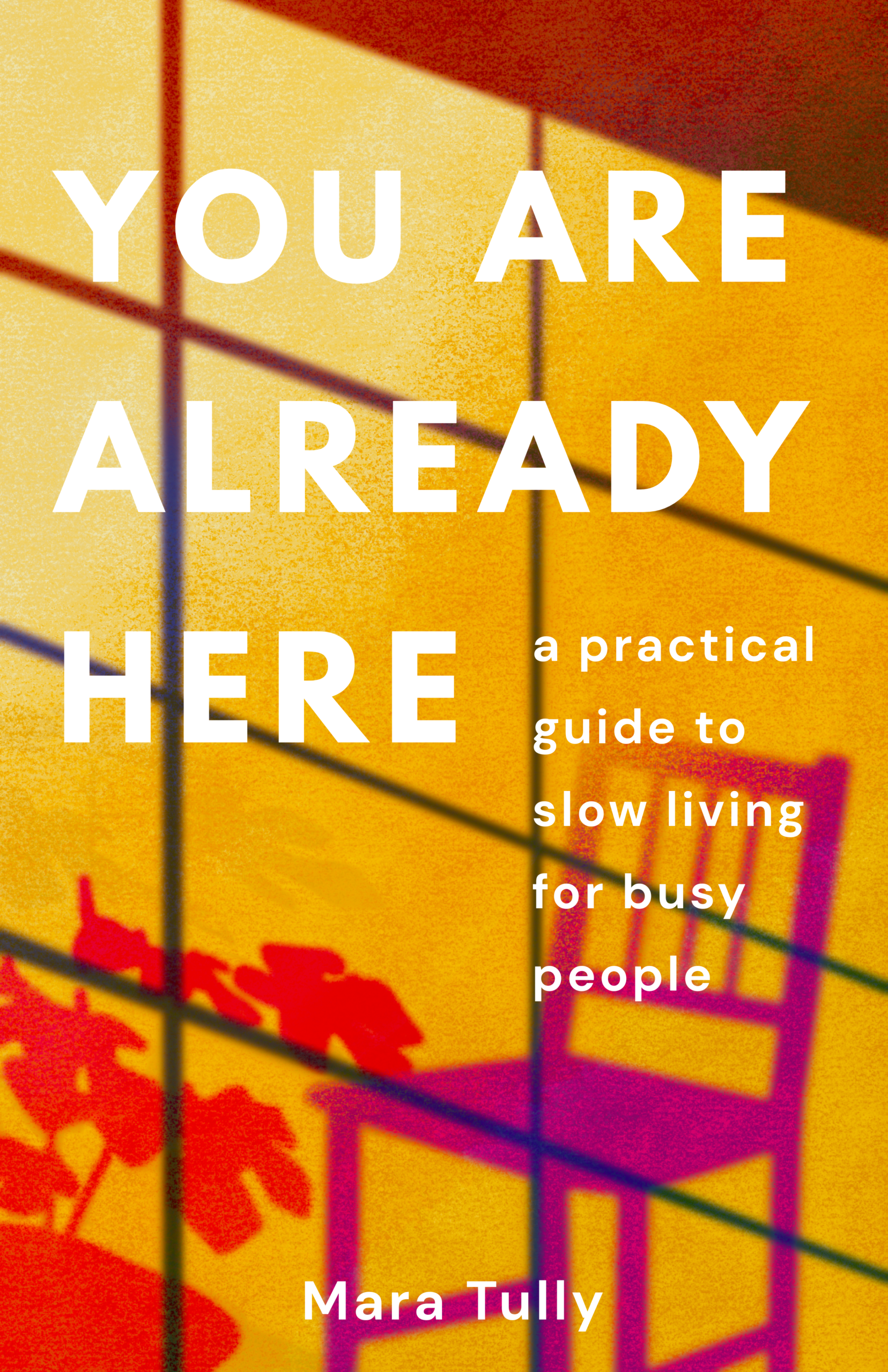
I’m working on a book built entirely around this question. You Are Already Here, a practical guide to slow living for people who don’t have the spare hours most slow living advice assumes you do, touches on it in The Stuff chapter if you’d like to read more in the meantime.